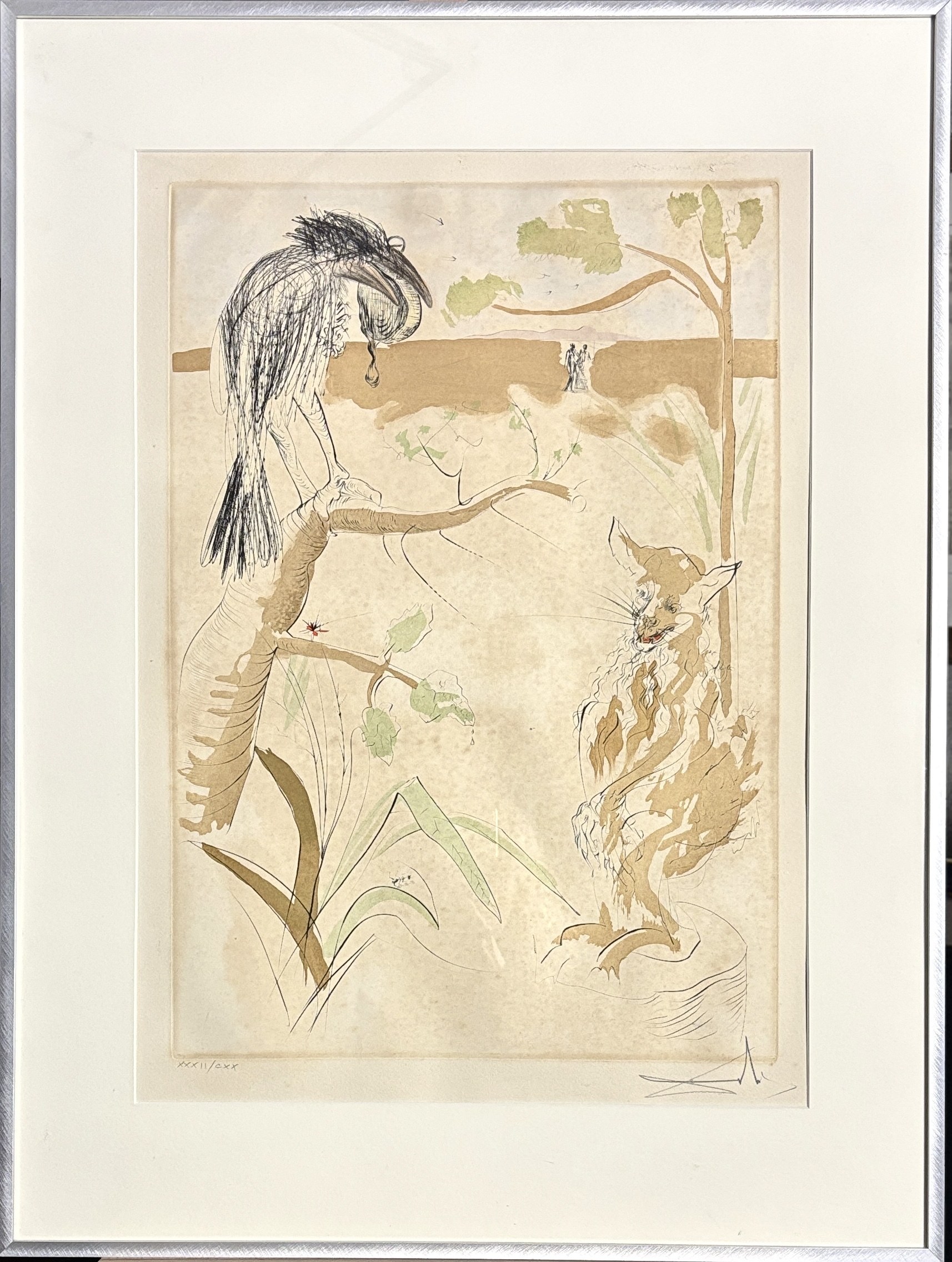

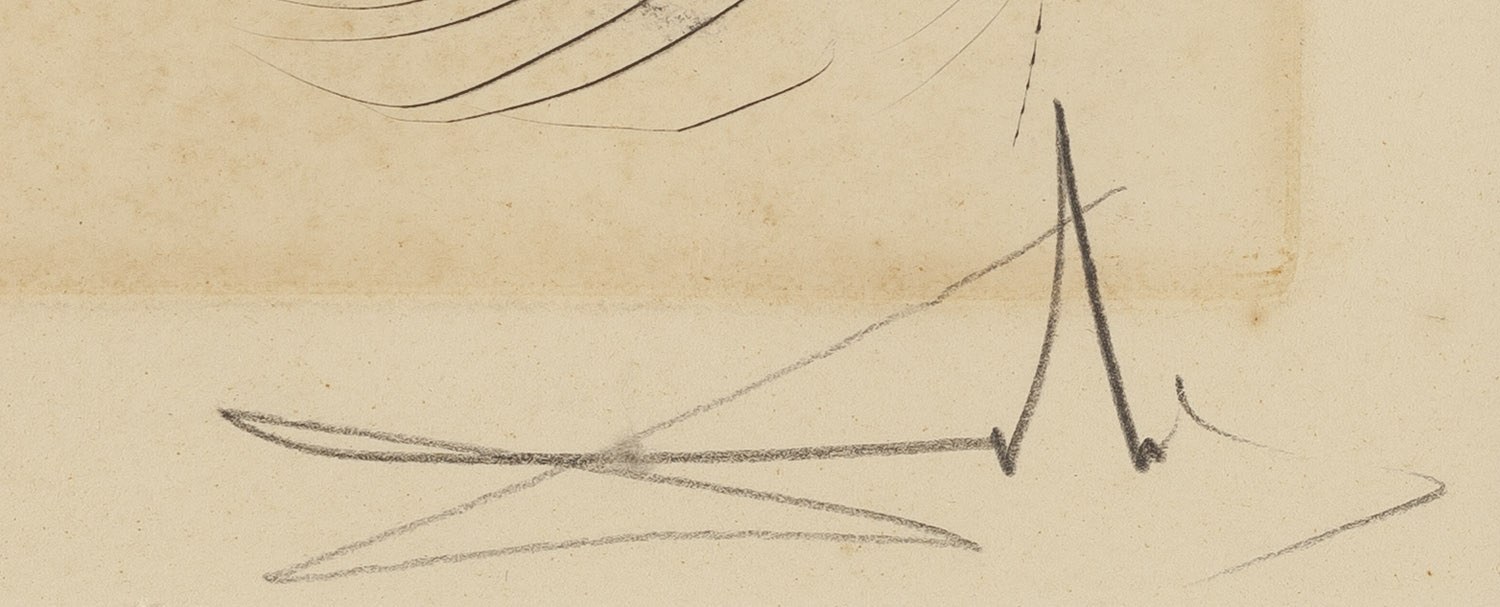
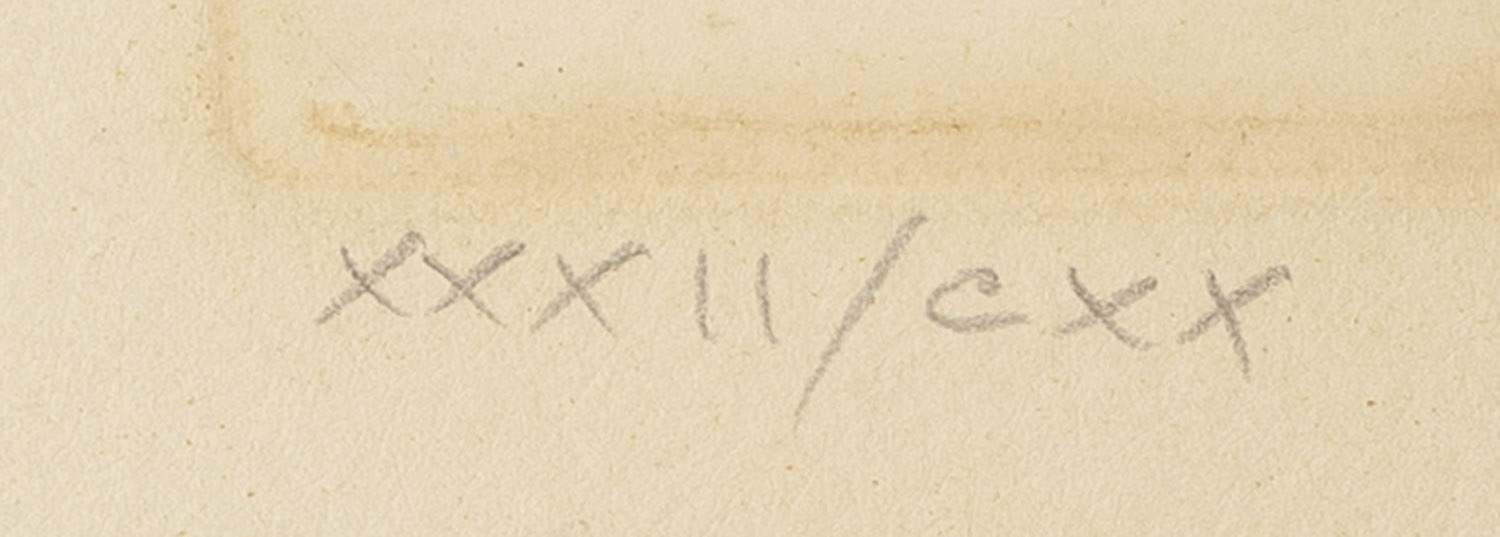
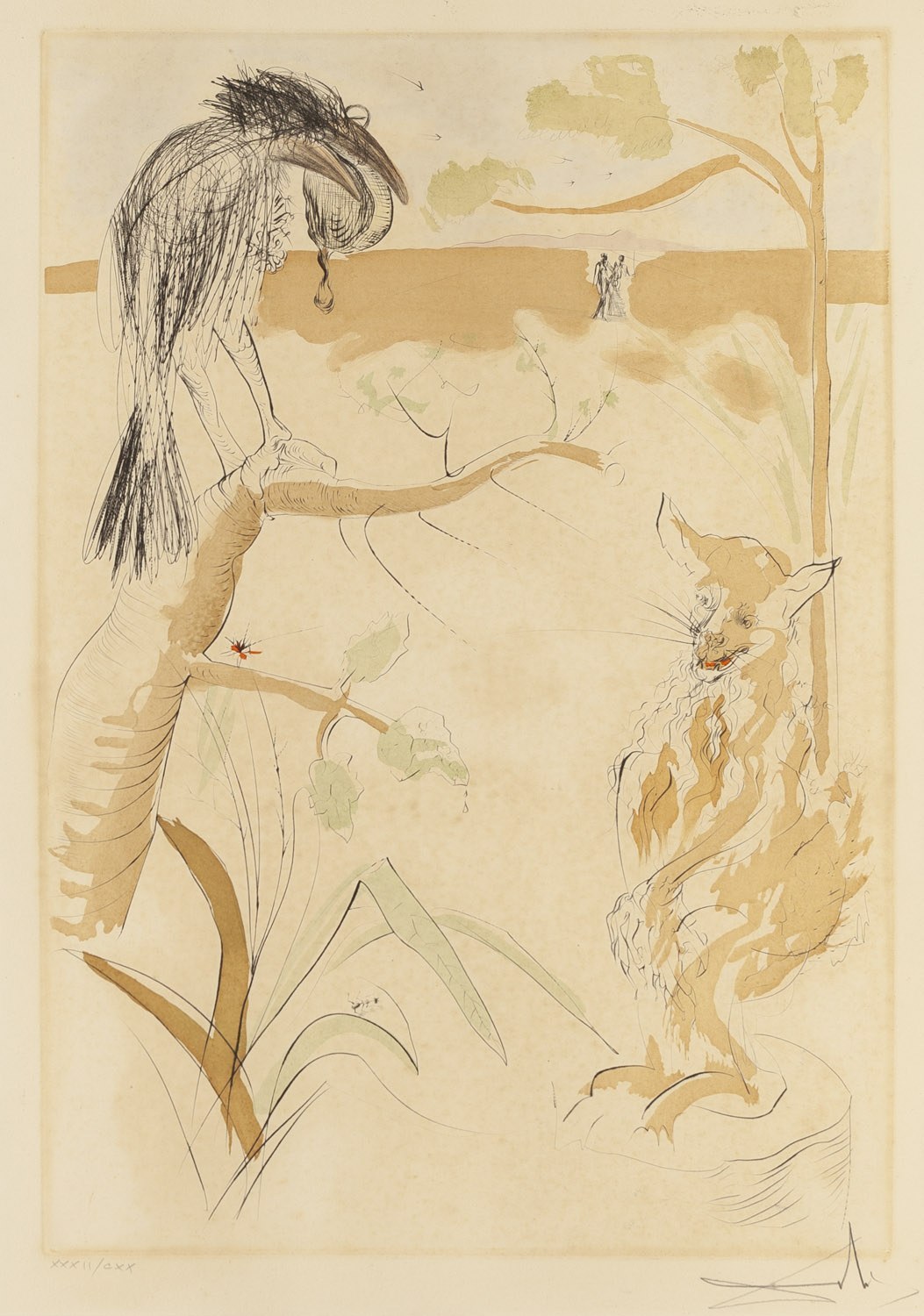
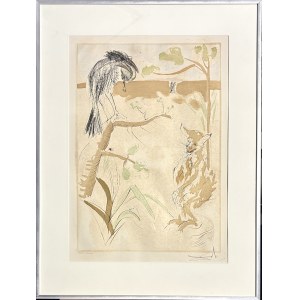
Etching on Richard de Bas Auvergne paper, hand-colored with watercolor using the “pochoir” technique; dimensions: 59 x 38 cm (plate size), mounted in a frame measuring 81 x 61 cm, a very rare limited edition of only 120 pieces, hand-numbered in Roman numerals XXXII/CXX and signed in pencil by the artist.
Information: The work presented here is part of the “Le Bestiaire de La Fontaine” series published in 1974 by Robert Mouret, featuring unusual Roman numerals reserved for lithographs on paper specially commissioned for this edition. The edition numbered with Arabic numerals was printed on standard Arches France paper.
Auvergne paper, produced using traditional methods since 1326, is available on request for special editions. (The factory has since been converted into a museum, producing up to 200 sheets per day using the same methods.)
Pochoir – A work hand-colored with watercolor using a stencil (French: pochoir). This method of applying paint is used primarily for coloring prints, as it allows the artist to produce identical prints. The artist cuts out a stencil and applies it to a previously created print. It is used primarily for prints made using metal-based techniques, such as drypoint, aquatint, etc.
References:
- Field Catalogue Raisonné #74-1 L
- Michler and Lopsinger Catalogue Raisonné #656
Salvador Dalí—a master of many printmaking techniques, including lithography, etching, and drypoint—created a series of illustrations for Jean de La Fontaine’s fables between 1967and 1974, commissioned by the French publishing house Éditions de la Fontaine. As part of his 1974 project "Le Bestiaire de La Fontaine Dalinisé," Salvador Dalí created a series of 12 etchings colored with watercolor, which have never been reprinted. The series, titled “Le Bestiaire de La Fontaine Dalinisé,” represents a remarkable fusion of classical literature and Dalí’s surrealist imagination.
The print on display illustrates La Fontaine’s most famous fable, one that every parent should read to their child.










Recentemente visualizados
Efetue login para ver a lista de itens
Preferidos
Efetue login para ver a lista de itens